Unfortunately, not all heart problems come with clearly recognizable symptoms.
If something was wrong with your heart, would you know? Unfortunately, not all heart problems come with clearly recognizable symptoms.
Though you might think of someone clutching their chest before they drop to the floor—like in a movie—it doesn’t always happen that way.
In fact, heart-related symptoms don’t even necessarily manifest in the chest. If you feel pain or discomfort elsewhere, you might be at risk of brushing it off as something else.
Other common misconceptions about heart disease and its symptoms have to do with gender differences. The misconception that women are somehow protected against heart disease has contributed to a general lack of awareness .
An American Heart Association survey indicated that only a small percentage of women (13%) believe they’re at risk, when cardiovascular disease is actually the leading cause of death among women.
Though women develop heart disease seven to ten years later than men, approximately one in three still die from it. Women have, on average, a four hour delay in seeking help when they’re experiencing a heart attack.
The best thing you can do for your health is see a doctor if you’re worried about something—especially if you’re over the age of 60, overweight, or suffer from high blood pressure, high cholesterol, or diabetes.
The more risk factors you have, the more concerned you should be. Watch out for these common symptoms:
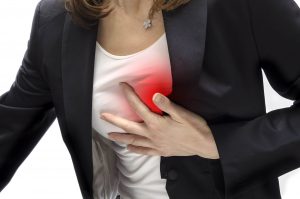
For both men and women, this is the most common symptom of a heart attack. It’s a signal that a blocked artery is cutting off the supply of blood to your heart, but it leads to different sensations in different people.
Some people feel like there’s someone sitting on their chest, while others feel burning, pinching, or squeezing. Others feel like they’re suffocating or can’t breathe.
It can happen when you’re moving or at rest, though women are more likely to be affected when they’re at rest or even asleep.
This feeling often lasts longer than several minutes—but even pain that disappears after a few minutes is worth getting checked out. If the sensation doesn’t go away, call 911 immediately.
For women especially, chest pain may not be the most noticeable or prominent symptom, and women are more likely than men to report heart attack symptoms unrelated to chest pain.
Some women may even experience a heart attack without experiencing any chest pain symptoms at all. Read on to find out what these symptoms are.

Women are more likely to report nausea, indigestion, and even vomiting during a heart attack.
Though you can experience stomach pain, indigestion, nausea, and heartburn for a wide variety of reasons that have absolutely nothing to do with your heart, it’s important to be aware that these symptoms can also signal a heart attack.
If you’re someone who is at risk, be vigilant and speak to a doctor if you’re experiencing any symptoms that are out of the ordinary, especially if you notice other heart-related symptoms alongside an upset stomach.
This is one of the most recognized heart attack symptoms. For some, it may manifest as discomfort in the shoulder blade.
It can occur in one arm or both, though it tends to appear on the left side of the body. Some describe the pain as originating in the chest and moving outward.
However, others report the pain as primarily in the arm.
A lot of factors can contribute to feeling faint or off-balance for a moment—standing up too fast, not having enough to eat or drink, or being overtired.
But combined with chest discomfort and shortness of breath, feeling unsteady on your feet can mean that you’ve experienced a drop in blood pressure.
This means that your heart isn’t working the way it should, and you should call a doctor right away.
When this kind of pain appears alone, it usually isn’t related to heart trouble. It’s more likely to be caused by colds, sinus problems, or musculoskeletal problems.
Chest pain or discomfort that spreads to your throat, jaw, upper back, or neck may be a sign of a heart attack. You should call 911.
This type of pain may be more likely to appear in women due to the nature of their blockages. Women tend to have blockages not only in their main arteries, but also in the smaller arteries that supply blood to the heart .
This is known as small vessel heart disease or coronary microvascular disease. As a result, pain can appear elsewhere in the body.
If you feel winded after an activity you had no trouble with in the past—for instance climbing a flight of stairs, carrying groceries, or lifting your child or grandchild—you should contact your doctor immediately.
This is one of those changes that can be a precursor to a heart attack. If you can’t explain your exhaustion, fatigue, or weakness and it tends to last for days at a time, it may be a sign of an oncoming heart attack.
This is especially true for women. Symptoms may also be triggered by mental or emotional stress.
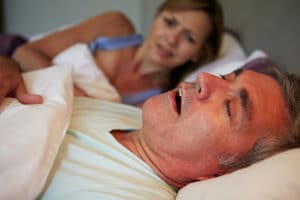
Most people snore a little when they’re asleep. But extremely loud snoring—including gasping, choking, coughing, or sputtering sounds—may be a sign of sleep apnea.
Sleep apnea occurs when you actually stop breathing for short moments several times during the night.
This condition puts additional stress on your heart which could ultimately lead to a heart attack. In order to get checked for sleep apnea, you’ll need to contact your doctor to schedule a sleep study.
If you’re diagnosed with sleep apnea, you may require a CPAP machine to help you breathe continuously while you sleep.
Yes. Chest pain is the most common symptom for both, but women are more likely than men to report symptoms unrelated to chest pain, such as nausea, indigestion, or vomiting. Some women may even experience a heart attack without any chest pain symptoms at all.
Pain in the arm or shoulder blade, discomfort spreading to the throat, jaw, neck, or upper back, lightheadedness, and shortness of breath can all signal a heart attack. If the chest sensation does not go away, call 911 immediately.
Unexplained exhaustion, fatigue, or weakness that lasts for days at a time can be a precursor to a heart attack, especially in women. Feeling winded after an activity that used to be easy is a change worth reporting to a doctor immediately.